There is a particular kind of helplessness that comes when a life has been saved, but the person cannot go home. Across Lagos, women who have just given birth — or survived surgery, or lost a pregnancy — are sometimes kept in hospital not because they are still unwell, but because they cannot settle the bill. The care has been given. The debt remains. And so they wait.
This project began with a simple conviction: that no woman should be held captive by a cost she never chose. In August 2025, over three days across six hospitals in Lagos, Walk in My Shoes set out to clear those bills — and to bring women home.
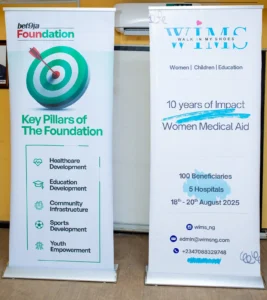
The timing was deliberate. This year marks ten years since WIMS began, in July 2015, with a single goal of keeping vulnerable children in school. A decade on, we wanted to mark the milestone not with a celebration of ourselves, but with an act of service for the women at the heart of our mission. And we did not do it alone — this project was brought to life in partnership with the Bet9ja Foundation, whose generosity made it possible to reach every woman we did.
What we set out to do
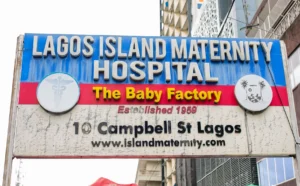
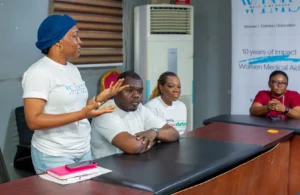
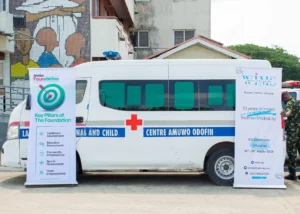
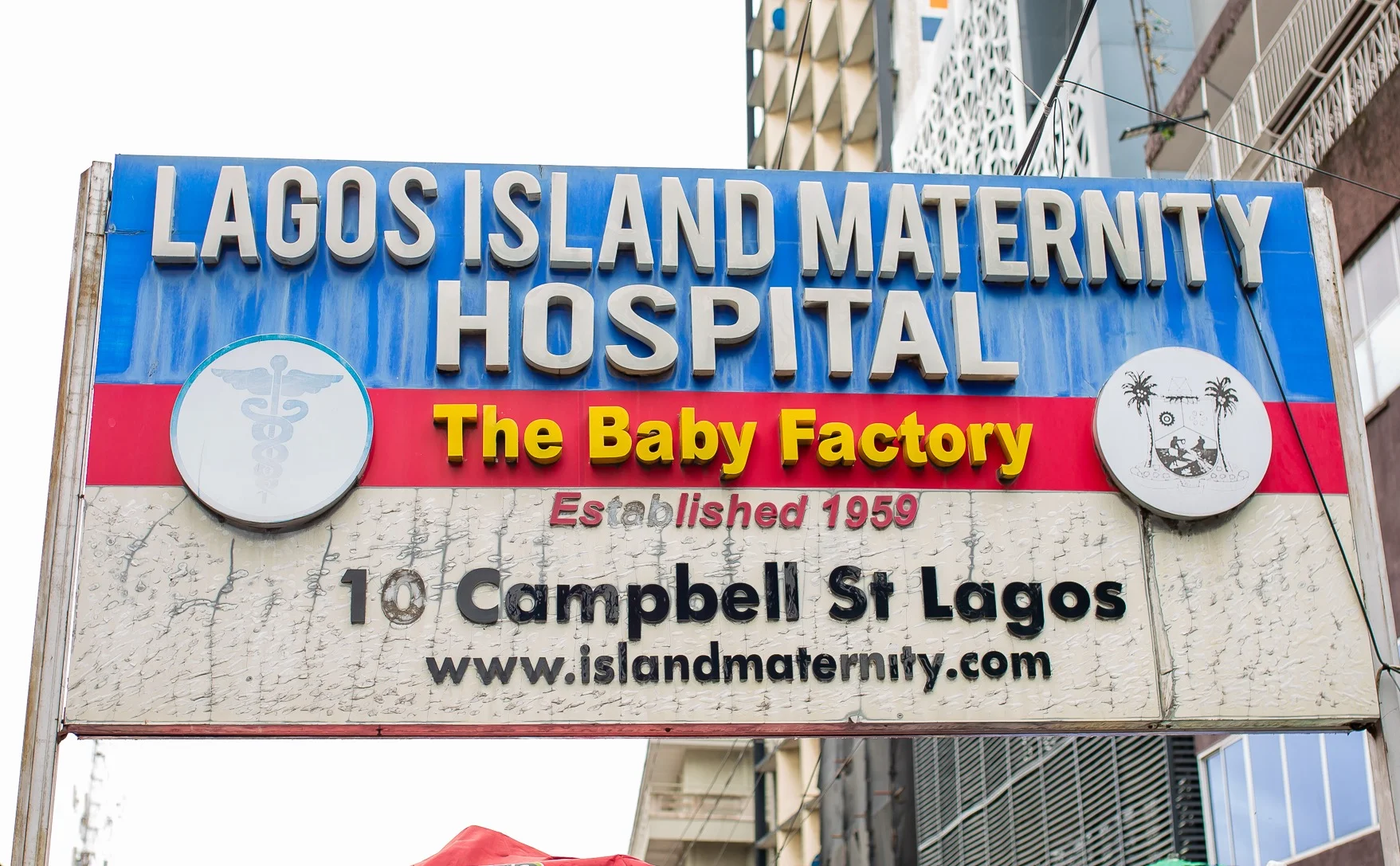
We visited Island Maternity Hospital, General Hospital Odan, General Hospital Onikan, Maternal & Child Care Randle, and Maternal & Child Care Amuwo. At each, we sat with the welfare teams, reviewed the cases of women unable to meet their medical costs, and paid what we could — some bills in full, others in part, so that as many women as possible could be reached.
By the end of the three days, we had supported 95 women. At least nine were discharged directly as a result — freed from the wards where their recovery had quietly turned into detention. Later, we returned to Island Maternity to cover the bills of six more women waiting on the list, bringing the total to 101 beneficiaries.
More than 70% of the women we supported were treated for reproductive health conditions and pregnancy-related complications — cervical cerclage, pregnancy-induced hypertension, gestational diabetes, fibroid surgeries, and emergency caesarean deliveries. Others were recovering from tumours, burns, fractures, and complex maternal cases.
The stories behind the numbers
Numbers tell you the scale. They do not tell you what it feels like to sit across from a woman and hear what the support meant.
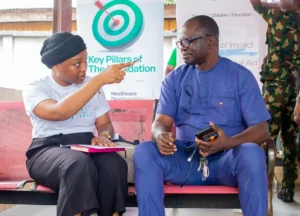
At Island Maternity, five women volunteered to share their stories — how a settled bill had changed the course of their lives. One was a sickle cell patient who had suffered a miscarriage and fibroid complications; her full treatment was generously covered by Ada Cuomo, Executive Director of the Bet9ja Foundation, who joined us during the visit.
At Maternal & Child Care Randle — the hospital where the need was greatest — we met women who had spent weeks, sometimes months, on prolonged bed rest until delivery. One required an evacuation following a cancerous pregnancy. Another had been abandoned by the father of her child and left entirely without support.
And at Maternal & Child Care Amuwo, we met a mother who had been hospitalised for over two months with her pre-term twins. One twin did not survive; the other remained in an incubator. The bills had grown beyond anything the family could carry — a weight made heavier still by the father’s stroke. Ada Cuomo again stepped forward to cover the entire cost of her care.
These are not statistics. They are women who were seen, at the exact moment they most needed to be.
A word on the hospitals
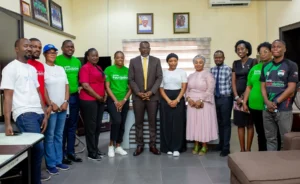
What struck us, again and again, was the warmth of the people who run these wards. We were welcomed by Medical Directors, senior management, nurses, and welfare teams who greeted our work not as charity, but as partnership. At General Hospital Odan, Dr Sola Pitan spoke candidly about the reality of his hospital: skilled doctors and surgeons doing extraordinary work, held back not by talent but by infrastructure and equipment. Invest there, he told us, and you multiply every life that passes through these doors.
We heard him. It is a reminder that clearing a bill is one act of relief in a much larger system — and that the deeper work of strengthening these hospitals is a conversation we intend to keep having.
What we carry forward
101 women. Nine immediate discharges. Six hospitals. Countless testimonies we will hold onto for a long time.
We are deeply grateful to the Bet9ja Foundation, our partner in bringing this project to life, and to Ada Cuomo for her extraordinary personal generosity; to the hospital teams who opened their doors to us; and to every woman who trusted us with her story.
Ten years ago, WIMS started with a promise to walk alongside the most vulnerable. This anniversary project was our way of renewing that promise — because at Walk in My Shoes, we believe that dignity is not a luxury, it is a right. And sometimes, restoring it is as simple, and as profound, as making sure a mother can finally go home.
Photos for the post